Please comment and/or "like" my essay - The Fine Print - on Open.Salon.com
If it gets enough interest, it might get published!
I published this previously on this blog, under the series Five Years Later, parts one through eight.
On the advice of my superb editor, Jill Costello of Costello Editorial Services, I revised this to be more of a personal essay than a piece of science writing.
I originally wrote this piece five years ago, and it has been interesting to see it evolve. In my opinion, it's the best it's ever been.
Showing posts with label mortality. Show all posts
Showing posts with label mortality. Show all posts
Thursday, April 14, 2011


Tuesday, March 1, 2011
The Ambivalent Parent
I was never sure about having children. I always imagined getting to a point when I would “know,” as they say. But we never arrived at that perfect moment. I always thought, we need to make more money, we need a bigger house, we need established careers, the list goes on. All these things that needed to be neatly in place never quite were. I’ve also enjoyed our freedom…traveling, eating out, doing what we want to do when we want to do it. At the same time, our window of opportunity has been shrinking exponentially…
I feel like most people don’t give much thought to becoming a parent —they just have children and work out the details later. I always resented this. How can you have children if you can’t afford to take care of them? If you don’t have time to give them the attention they need? In our society, becoming a parent is a given, it’s expected even. I resent this attitude, and the strange looks I have received when answering no to that dreaded question, “Do you have children?” Once, while getting my hair cut, a couple of women took this even further and asked me what I did with all my free time. Did I manage to keep myself busy, even without children? I resent the attitude that not having children somehow means you can’t or don’t have a busy, productive, meaningful life.
Every day I’m confronted by reasons not to have children. For example, we live in a world where a female Ivy league graduate student could be murdered inside the “safety” of her own research lab (and in a cruel twist of fate, just days before her wedding). This story stuck with me. When this happened, I thought, really, who wants to bring a child into a world like this? Having a child means you have so much to lose, so much at risk. It makes me uneasy. Could I actually let my heart be that vulnerable? Do I have the courage to spend years raising and protecting a child and then release her into a world that could eat her alive, even in the places she is supposed to be the safest? Do other people even think about this?
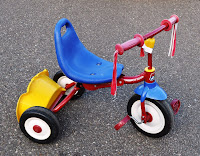 I was 23 when my nephew Chris was born. Somewhere between baby and young man, during trips to the children’s museum and swimming lessons and Fourth of July fireworks, I had a glimpse of something I wanted. Something that was worth the risks and vulnerabilities. I watched my husband run up and down the drive way, holding on to the seat of Chris’s bike, until Chris could finally pedal away on his own. I remembered my dad doing the same for my sisters and me. I had the distinct feeling that—for us, at that moment—this was one of the most important things we had ever done.
I almost lost my mother when I was 29. Suddenly I was afraid of everything. Bears. Cancer. Heights. Bridges. You name it. For years I felt vulnerable, struggling to accept that we have no control over anything. But there was something about caring for a parent and seeing my parents’ commitment to each other that taught me something profound and unexplainable about marriage and family. I don’t want it all to stop here. I want more. I want to pass it on.
 And so, we left our destiny to nature, God, the Universe, whatever name you’d like to put on it, and at the end of August, we are expecting a child. It still seems weird to say. And a little abstract (other than the fact that I’ve felt like puking my guts out every day for the past three months). And the decision to get here very winding and indirect. And scary. And someday, just like our parents, we will have to quit running along behind this little one, and just let go...
I feel like most people don’t give much thought to becoming a parent —they just have children and work out the details later. I always resented this. How can you have children if you can’t afford to take care of them? If you don’t have time to give them the attention they need? In our society, becoming a parent is a given, it’s expected even. I resent this attitude, and the strange looks I have received when answering no to that dreaded question, “Do you have children?” Once, while getting my hair cut, a couple of women took this even further and asked me what I did with all my free time. Did I manage to keep myself busy, even without children? I resent the attitude that not having children somehow means you can’t or don’t have a busy, productive, meaningful life.
Every day I’m confronted by reasons not to have children. For example, we live in a world where a female Ivy league graduate student could be murdered inside the “safety” of her own research lab (and in a cruel twist of fate, just days before her wedding). This story stuck with me. When this happened, I thought, really, who wants to bring a child into a world like this? Having a child means you have so much to lose, so much at risk. It makes me uneasy. Could I actually let my heart be that vulnerable? Do I have the courage to spend years raising and protecting a child and then release her into a world that could eat her alive, even in the places she is supposed to be the safest? Do other people even think about this?
 I was 23 when my nephew Chris was born. Somewhere between baby and young man, during trips to the children’s museum and swimming lessons and Fourth of July fireworks, I had a glimpse of something I wanted. Something that was worth the risks and vulnerabilities. I watched my husband run up and down the drive way, holding on to the seat of Chris’s bike, until Chris could finally pedal away on his own. I remembered my dad doing the same for my sisters and me. I had the distinct feeling that—for us, at that moment—this was one of the most important things we had ever done.
Friday, December 3, 2010
Stress is Bad at the Bottom of the Hierarchy...Luckily Your Attitude Counts for Something
I just read this amazing article in Wired about the connection between stress, your physical health, and your emotional state. This article describes how anthropologist Robert Sapolsky proved that baboons at the bottom of the social hierarchy were more stressed out and had more health problems than baboons at the top of the hierarchy. This article cites studies of stress in baboons, Oscar nominees/winners, and British civil servants, showing that there is a direct connection between stress and your health:
I was floored by the description of the following study by Michael Marmot about British Civil Servants. For the past 25 years the study has tracked 28,000 British men and women working in Civil Servant positions who all have access to the same health care system, who “don’t have to worry about getting laid off,” and “spend most of their workdays shuffling papers.” Here is a description of the findings:
In light of these thoughts, the following quote really stuck with me, and I’ll be thinking about how I can be more aware of my own emotional state and my attitude and how these affect my health.
Stress hollows out our bones and atrophies our muscles. It triggers adult-onset diabetes and is a leading cause of male impotence. In fact, numerous studies of human longevity in developed countries have found that psychosocial factors such as stress are the single most important variable in determining the length of a life. It’s not that genes and risk factors like smoking don’t matter. It’s that our levels of stress matter more.The shocking part of the article for me was the finding that it’s not necessarily a stressful, demanding job that is so “deadly,” but rather the feeling like you have no control or that your work is meaningless…sound familiar to anyone?!
While doctors speculated for years that increasing rates of cardiovascular disease in women might be linked to the increasing number of females employed outside the home, that correlation turned out to be nonexistent. Working women didn’t have more heart attacks. There were, however, two glaring statistical exceptions to the rule: Women developed significantly more heart disease if they performed menial clerical work or when they had an unsupportive boss. The work, in other words, wasn’t the problem. It was the subordination.This passage also points to the fact that some groups are more vulnerable than others. In this case, women. That got me thinking about our campus hierarchy and our limited term employees, roughly 75 percent of which are women. It is even more troubling to think that many of these women, probably the most vulnerable in our campus community to stress-related health problems, have no health insurance, paid time off, and don’t make a living wage.
I was floored by the description of the following study by Michael Marmot about British Civil Servants. For the past 25 years the study has tracked 28,000 British men and women working in Civil Servant positions who all have access to the same health care system, who “don’t have to worry about getting laid off,” and “spend most of their workdays shuffling papers.” Here is a description of the findings:
The differences are dramatic. After tracking thousands of civil servants for decades, Marmot was able to demonstrate that between the ages of 40 and 64, workers at the bottom of the hierarchy had a mortality rate four times higher than that of people at the top. Even after accounting for genetic risks and behaviors like smoking and binge drinking, civil servants at the bottom of the pecking order still had nearly double the mortality rate of those at the top.This study is haunting to me because our campus has the same type of hierarchical Civil Servant system. If the people at the bottom of the hierarchy have “double the mortality rate” in a situation where they have the same benefits as people at the top of the hierarchy, what about the people at the bottom of the hierarchy who DON’T have benefits? What would a study of stress reveal about this population?
In light of these thoughts, the following quote really stuck with me, and I’ll be thinking about how I can be more aware of my own emotional state and my attitude and how these affect my health.
The moral is that the most dangerous kinds of stress don’t feel that stressful. It’s not the late night at the office that’s going to kill us; it’s the feeling that nothing can be done. The person most at risk for heart disease isn’t the high-powered executive anxious about their endless to-do list — it’s the frustrated janitor stuck with existential despair.
Monday, October 25, 2010
Five Years Later: Part 8
Fourteen weeks after the stroke she comes home, walking with a hemi-cane and an ankle brace, her lifeless left arm in a sling.
Winter is on its way out, leaving an oozy, muddy, rutted-up earth. We sit at the kitchen table, in front of the window. I am in the same chair where she sat on that night almost five months earlier. Framed by the squares of the window pane, the birds outside visit the feeder.
“Dad said I should make sure you know that when I cry, it’s not because I’m sad. It’s because I’m happy,” she says.
I stop chewing for a moment. I look at the bird feeder to see my first Robin of the season.
“You know that, don’t you?” she adds.
It seems like a good place to start. I’ve stopped measuring the future in terms of the past, waiting for myself—and my mother—to re-emerge the same as we had been, as if we’d just returned from vacation or woken up from a dream. We have only just begun to re-define ourselves and our family, one moment at a time. I’ve said goodbye to the familiarity of the past, and accepted the uncertainty of the future.
She starts reading her daily devotions, using a pink index card to help her follow the line. Her hair has grown in around her incision. I glance at her gratitude journal, lying open on the table.
“Our homes are our sanctuary from the world,” she has written. “Our lives are made up of all the little traditions and experiences we share with people. Cherish every moment.”
“Did I sign up for this?” Dad jokes, as he helps her walk to the bathroom. “I’m not sure this was in the contract. It must have been in the fine print.”
“You better make sure you have it in the fine print,” she laughs, turning to look at me.
And I think to myself that we are all in each other’s fine print, neatly inscribed onto lines containing our greatest liabilities. With every patient comes a family, sustained by their community and their faith in the medical professionals to whom they entrust the most precious pieces of their fine print. This is the year I am getting married, and all around me, I see love in fine print.
Winter is on its way out, leaving an oozy, muddy, rutted-up earth. We sit at the kitchen table, in front of the window. I am in the same chair where she sat on that night almost five months earlier. Framed by the squares of the window pane, the birds outside visit the feeder.
“Dad said I should make sure you know that when I cry, it’s not because I’m sad. It’s because I’m happy,” she says.
I stop chewing for a moment. I look at the bird feeder to see my first Robin of the season.
“You know that, don’t you?” she adds.
It seems like a good place to start. I’ve stopped measuring the future in terms of the past, waiting for myself—and my mother—to re-emerge the same as we had been, as if we’d just returned from vacation or woken up from a dream. We have only just begun to re-define ourselves and our family, one moment at a time. I’ve said goodbye to the familiarity of the past, and accepted the uncertainty of the future.
She starts reading her daily devotions, using a pink index card to help her follow the line. Her hair has grown in around her incision. I glance at her gratitude journal, lying open on the table.
“Our homes are our sanctuary from the world,” she has written. “Our lives are made up of all the little traditions and experiences we share with people. Cherish every moment.”
“Did I sign up for this?” Dad jokes, as he helps her walk to the bathroom. “I’m not sure this was in the contract. It must have been in the fine print.”
“You better make sure you have it in the fine print,” she laughs, turning to look at me.
And I think to myself that we are all in each other’s fine print, neatly inscribed onto lines containing our greatest liabilities. With every patient comes a family, sustained by their community and their faith in the medical professionals to whom they entrust the most precious pieces of their fine print. This is the year I am getting married, and all around me, I see love in fine print.
Friday, October 22, 2010
Five Years Later: Part 7
I am lying on a bed in a hospital gown, a Doppler ultrasound machine next to me, waiting to have a trans-thoracic echocardiogram with a bubble study. This test will reveal whether I have a hole in my heart--that patent foramen ovale that threads through the family lines.
“Have you had an IV before?” the nurse asks me.
“No. But I’ve given blood,” I reply.
“Oh, well this needle is about a third of the size. Don’t worry—I’ve done this a couple times before,” she jokes, as she sticks me.
“At the end of the echo, we’ll be injecting agitated saline into your IV, and then we’ll watch it move through your heart,” she tells me.
Jason, the echocardiographer, attaches cords to my chest. “This is a Doppler ultrasound,” he says, applying a jelly-like substance to my chest and placing a flat, rectangular object there.
Suddenly my heart is on the monitor. It is stunning. A big oblong ball of pulsing light surrounded by darkness. It is heaving and thrusting and appears to be divided in two.
“See this smaller side?” Jason asks. “This is your pulmonary side. It goes right to the lungs. All your veins feed back to this side. The other side is your systemic side.”
He starts capturing pictures of my heart on the machine.
“Did you know the aortic valve is the point of highest blood pressure in the body? Look, the mitral valve looks like a fish mouth! Do you want to see your lung? Take a deep breath.”
I inhale. My heart disappears. I exhale and my heart appears again. I can’t help laughing.
“Our heart valves are actually like one-way doors,” Jason says. “Two of the valves contract at once and the other two relax. So it’s not really a pump. If your heart was really a pump, you’d only live five years and your heart would have to be three times as big.”
“My Mom has a hole in her heart,” I tell him.
“Ah, patent foramen ovale,” he says. “It means ‘the Window’ in Latin. It’s there so we can breathe without our lungs when we’re still inside our mothers. That explains why you’re having the bubble study.”
The nurse injects the agitated saline into my IV.
Instantly I see the right side of my heart fill with bubbles.
“See all the bubbles in the pulmonary side?” the nurse asks me.
Jason is suddenly quiet for the first time. “Wait, let’s do it again,” he tells the nurse.
“Why?” I ask, watching the bubbles on the monitor.
“I don’t leave any room for doubt,” he says.
He takes a series of digital pictures on the monitor. The muffled sound of my beating heart comes out through the machine as he captures the sound files for the cardiologist to listen to.
“So when do I find out?” I ask him when it’s all over.
“Next week,” he says.
But I don’t have to wait. I saw the bubbles move. I know I have my mother’s heart.
“Have you had an IV before?” the nurse asks me.
“No. But I’ve given blood,” I reply.
“Oh, well this needle is about a third of the size. Don’t worry—I’ve done this a couple times before,” she jokes, as she sticks me.
“At the end of the echo, we’ll be injecting agitated saline into your IV, and then we’ll watch it move through your heart,” she tells me.
Jason, the echocardiographer, attaches cords to my chest. “This is a Doppler ultrasound,” he says, applying a jelly-like substance to my chest and placing a flat, rectangular object there.
Suddenly my heart is on the monitor. It is stunning. A big oblong ball of pulsing light surrounded by darkness. It is heaving and thrusting and appears to be divided in two.
“See this smaller side?” Jason asks. “This is your pulmonary side. It goes right to the lungs. All your veins feed back to this side. The other side is your systemic side.”
He starts capturing pictures of my heart on the machine.
“Did you know the aortic valve is the point of highest blood pressure in the body? Look, the mitral valve looks like a fish mouth! Do you want to see your lung? Take a deep breath.”
I inhale. My heart disappears. I exhale and my heart appears again. I can’t help laughing.
“Our heart valves are actually like one-way doors,” Jason says. “Two of the valves contract at once and the other two relax. So it’s not really a pump. If your heart was really a pump, you’d only live five years and your heart would have to be three times as big.”
“My Mom has a hole in her heart,” I tell him.
“Ah, patent foramen ovale,” he says. “It means ‘the Window’ in Latin. It’s there so we can breathe without our lungs when we’re still inside our mothers. That explains why you’re having the bubble study.”
The nurse injects the agitated saline into my IV.
Instantly I see the right side of my heart fill with bubbles.
“See all the bubbles in the pulmonary side?” the nurse asks me.
Jason is suddenly quiet for the first time. “Wait, let’s do it again,” he tells the nurse.
“Why?” I ask, watching the bubbles on the monitor.
“I don’t leave any room for doubt,” he says.
He takes a series of digital pictures on the monitor. The muffled sound of my beating heart comes out through the machine as he captures the sound files for the cardiologist to listen to.
“So when do I find out?” I ask him when it’s all over.
“Next week,” he says.
But I don’t have to wait. I saw the bubbles move. I know I have my mother’s heart.
Thursday, October 21, 2010
Five Years Later: Part 6
Five weeks after the stroke, the neurosurgeon says it’s time to put Mom’s head back together. He tells us that he will re-attach her skull using 4 millimeter screws and some metal plates.
“Will you be using a power drill on my head?” Mom jokes to the neurosurgeon, her voice soft and raspy. “I’m not entering any beauty pageants anytime soon so it should be fine.”
She alternates between humor and bouts of deep sadness that escalate as she becomes more aware of her physical limitations. At first, she could not even open her eyes or speak, so we held her eyes open while she used markers and a dry erase board to communicate. But with occupational, speech, and physical therapy, she went from bedridden to walking with a four-footed hemi-cane in a matter of weeks.
After her first brain surgery, Mom began taking blood thinner medication, which helps prevent blood clots, but also increases the risk of bleeding. As a result, her blood thinner medication is reversed before her second brain surgery, restoring her blood’s natural ability to clot. As a pre-caution, a radiologist places a small umbrella-like device called an inferior vena cava (IVC) filter in her abdomen to catch blood clots until she heals from surgery and resumes her blood thinner medication.
“The filter is in her abdomen, in the major highway known as the vena cava,” the radiologist explains. “We come up through the femoral veins, the major veins in the legs, which make a fork in the road and bifurcate from the vena cava, the main vein that empties up to the heart.”
Leaving only a minuscule incision, the radiologist positions the filter via tiny cameras and small catheters, all so Mom won’t pass another clot while they are screwing her skull back on. Doctors can now thread tiny catheters and devices through veins and arteries, transforming open heart surgery into minimally invasive procedures like angiograms, angioplasty, and stent placement, yet cerebral edema can only be treated by cracking open Mom’s skull and cutting out part of her brain. Modern medicine contains surprising juxtapositions of old and new, invasive and non-invasive.
After the surgery, she is awake, but groggy. Iodine is lightly smeared on her right cheek, mixed with blood. She wears a turban of gauze. She says she can’t find her thinking brain.
“This brain says bad things,” she tells us.
“Like what?” I ask.
“That maybe it should be like ‘Million Dollar Baby.’”
I think for a moment and then explain the allusion to Dad. “It’s a movie about a boxer who asks her coach to euthanize her after she becomes paralyzed.”
We are quiet.
Despite tremendous physical healing, I can’t help but think that another type of healing—much more elusive, hard to treat, and slow to heal—has hardly begun. With physical rehabilitation has come a devastating awareness of her physical limitations. We have been well trained in the use of wheelchairs, hemi-canes, and leg braces, but we are unable to deal with our own grief. I fear random, unpredictable things, like the brain not having enough room to swell, or a clot smaller than the tip of a pencil causing a stroke. When it comes to mortality, we have a natural suspension of disbelief, and mine had been forever shattered.
As we try to chase her bad brain away, on the other side of the curtain dividing Mom’s room, an oncologist is telling Mom’s elderly roommate, the primary caregiver for her diabetic daughter with kidney failure, that she has terminal liver cancer.
“Will you be using a power drill on my head?” Mom jokes to the neurosurgeon, her voice soft and raspy. “I’m not entering any beauty pageants anytime soon so it should be fine.”
She alternates between humor and bouts of deep sadness that escalate as she becomes more aware of her physical limitations. At first, she could not even open her eyes or speak, so we held her eyes open while she used markers and a dry erase board to communicate. But with occupational, speech, and physical therapy, she went from bedridden to walking with a four-footed hemi-cane in a matter of weeks.
After her first brain surgery, Mom began taking blood thinner medication, which helps prevent blood clots, but also increases the risk of bleeding. As a result, her blood thinner medication is reversed before her second brain surgery, restoring her blood’s natural ability to clot. As a pre-caution, a radiologist places a small umbrella-like device called an inferior vena cava (IVC) filter in her abdomen to catch blood clots until she heals from surgery and resumes her blood thinner medication.
“The filter is in her abdomen, in the major highway known as the vena cava,” the radiologist explains. “We come up through the femoral veins, the major veins in the legs, which make a fork in the road and bifurcate from the vena cava, the main vein that empties up to the heart.”
Leaving only a minuscule incision, the radiologist positions the filter via tiny cameras and small catheters, all so Mom won’t pass another clot while they are screwing her skull back on. Doctors can now thread tiny catheters and devices through veins and arteries, transforming open heart surgery into minimally invasive procedures like angiograms, angioplasty, and stent placement, yet cerebral edema can only be treated by cracking open Mom’s skull and cutting out part of her brain. Modern medicine contains surprising juxtapositions of old and new, invasive and non-invasive.
After the surgery, she is awake, but groggy. Iodine is lightly smeared on her right cheek, mixed with blood. She wears a turban of gauze. She says she can’t find her thinking brain.
“This brain says bad things,” she tells us.
“Like what?” I ask.
“That maybe it should be like ‘Million Dollar Baby.’”
I think for a moment and then explain the allusion to Dad. “It’s a movie about a boxer who asks her coach to euthanize her after she becomes paralyzed.”
We are quiet.
Despite tremendous physical healing, I can’t help but think that another type of healing—much more elusive, hard to treat, and slow to heal—has hardly begun. With physical rehabilitation has come a devastating awareness of her physical limitations. We have been well trained in the use of wheelchairs, hemi-canes, and leg braces, but we are unable to deal with our own grief. I fear random, unpredictable things, like the brain not having enough room to swell, or a clot smaller than the tip of a pencil causing a stroke. When it comes to mortality, we have a natural suspension of disbelief, and mine had been forever shattered.
As we try to chase her bad brain away, on the other side of the curtain dividing Mom’s room, an oncologist is telling Mom’s elderly roommate, the primary caregiver for her diabetic daughter with kidney failure, that she has terminal liver cancer.
Monday, October 18, 2010
Five Years Later: Part 5
“We detected some right-to-left shunting, consistent with PFO,” the cardiologist says, discussing the hole in Mom’s heart.
“Her mother and two of her brothers had that too,” my sister remarks. As a nurse, my sister understands exactly what the cardiologist is talking about.
PFO. Patent foramen ovale. A hole between the chambers of the heart that allows blood to travel through an unborn baby’s heart and body, while bypassing its developing lungs. At birth, when the baby’s lungs become functional, blood begins to flow through the lungs, and the foramen ovale soon closes. However, medical research suggests that in about 25 percent of the population, the foramen ovale remains open, and is associated with an increased risk of ischemic stroke. Doctors believe that the PFO can allow blood to bypass its normal route, acting as a window that can shunt blood headed to the lungs, which filter chemicals and blood, back into systemic circulation, and on to the brain or other parts of the body. According to the American Heart Association, if this counter-flow carries a clot, it can cause a stroke, and clots can even form in the PFO itself.
My mother is the youngest of four siblings, including two brothers who died of strokes at ages 62 and 70. For us, this is an important clue: family history of PFO and stroke. And there are other clues.
The stroke was caused by a blood clot lodged in her right carotid artery, obstructing blood flow to her brain. A deep vein thrombosis (DVT), also known as a blood clot, formed in Mom’s leg sometime after she broke her foot. One neurologist suggested that part of this clot traveled to her right carotid artery, causing the stroke. Another neurologist speculated that the stroke was caused by a clot that likely originated from the PFO.
And there is another clue. A blood test reveals a clotting disorder called lupus anti-coagulant. A propensity to clot. A broken foot combined with a DVT, PFO, and a clotting disorder. A perfect alignment of rare circumstances.
“Her mother and two of her brothers had that too,” my sister remarks. As a nurse, my sister understands exactly what the cardiologist is talking about.
PFO. Patent foramen ovale. A hole between the chambers of the heart that allows blood to travel through an unborn baby’s heart and body, while bypassing its developing lungs. At birth, when the baby’s lungs become functional, blood begins to flow through the lungs, and the foramen ovale soon closes. However, medical research suggests that in about 25 percent of the population, the foramen ovale remains open, and is associated with an increased risk of ischemic stroke. Doctors believe that the PFO can allow blood to bypass its normal route, acting as a window that can shunt blood headed to the lungs, which filter chemicals and blood, back into systemic circulation, and on to the brain or other parts of the body. According to the American Heart Association, if this counter-flow carries a clot, it can cause a stroke, and clots can even form in the PFO itself.
My mother is the youngest of four siblings, including two brothers who died of strokes at ages 62 and 70. For us, this is an important clue: family history of PFO and stroke. And there are other clues.
The stroke was caused by a blood clot lodged in her right carotid artery, obstructing blood flow to her brain. A deep vein thrombosis (DVT), also known as a blood clot, formed in Mom’s leg sometime after she broke her foot. One neurologist suggested that part of this clot traveled to her right carotid artery, causing the stroke. Another neurologist speculated that the stroke was caused by a clot that likely originated from the PFO.
And there is another clue. A blood test reveals a clotting disorder called lupus anti-coagulant. A propensity to clot. A broken foot combined with a DVT, PFO, and a clotting disorder. A perfect alignment of rare circumstances.
Friday, October 15, 2010
Five Years Later: Part 4
Lori is different than many of the nurses in the critical care unit. She talks to me. And she uses words I understand. She tells me she has worked as a flight nurse in Detroit and that she’s been a nurse since the Florence Nightingale days.
Mom’s head is wrapped in a turban of gauze and tape. Her brain is so swollen that her right eye is bulging, like someone punched her. Intubated and on a ventilator, her tongue is bloody, crusty, swollen, and sticking out of her mouth beneath the endotracheal tube. Her chest heaves and a muffled, junky cough comes out through the ventilator, triggering an eerie, honking alarm.
We are hopeful. Last night Mom put her right hand up to her mouth and touched her breathing tube. Throughout the day, she wiggled her toes and fingers on her right side to command: thumbs up, thumbs down, and a wiggle of her pinky. Purposeful movements.
But now it is just before 4 am and her blood pressure is erratic. Alarms are sounding. She’s terribly congested. Her temperature is almost 102. Lori puts ice bags and a cooling blanket on her.
“Let’s just see what the next hour brings and then go from there,” Lori says. “This is the way it is with neuro patients. It’s like walking a fine wire fence. They could go either direction at any time. All we can do is read the symptoms and treat each one.”
We go through each night like this, walking the fine wire fence. Wiggle your toes. Squeeze my hand. We read to her, paint her toenails, and play her CDs. I realize that we have the same ridges in our fingernails, and that my toes are exactly like hers in their size and shape.
The noises haunt me. The whistling compression of air as the Venaflow sleeve contracts on her right leg, preventing the formation of blood clots. The beeps and clicks and alarms on the IVs and on the monitor that measures intercranial pressure. So many alarms.
For 13 days she walks that fine wire fence, the mysteries and miracles of critical care unfolding each moment. Medications support her blood pressure and for a while she doesn’t breathe above the rate on the ventilator. We watch fearfully as her intercranial pressure increases. Her heart rate and temperature are persistently high. She receives antibiotics for pneumonia. CT scans check for bleeding and swelling in the brain. A feeding tube is placed and so is a peripherally inserted central catheter (PICC line) for drawing blood and administering medicine arterially. She has high blood sugars so she is on an insulin drip. Her raw and scabby fingers are poked often to test her blood sugars. Her blood is drawn frequently to monitor delicate levels.
We have lost our center. On good days, we are giddy with hope. On other days, we cry and wander and try to prop each other up. We are in the embrace of friends, family, co-workers, and hospital staff who bring us meals, cards, flowers, and prayers. We are disoriented. We lose things—our vehicles, our coats, our minds. We are relieved to find Mom’s wedding ring at home. And life goes on. There are bills to pay, plants to water, pets to feed. We have divided Mom’s life among us, and still we cannot keep up.
One night, a family is standing around the bed of a new patient in the critical care unit. All the lights are on in the room. Moments later, an alarm sounds.
“Code blue, CCU…Code blue, CCU…” a computerized female voice repeats.
A woman screams. Footsteps pound down the hallway. “NO!!!!” the woman sobs.
More footsteps pound down the hallway.
In the middle of the night, I linger alone at Mom’s bedside, in this world of machines and monitors, where the sound of grief is profoundly louder than the combined chorus of many alarms. Where strangers don’t introduce themselves, bringing machines they don’t explain. I am terrified of the code blue. Terrified that we’ll have to bury our mother.
Mom’s head is wrapped in a turban of gauze and tape. Her brain is so swollen that her right eye is bulging, like someone punched her. Intubated and on a ventilator, her tongue is bloody, crusty, swollen, and sticking out of her mouth beneath the endotracheal tube. Her chest heaves and a muffled, junky cough comes out through the ventilator, triggering an eerie, honking alarm.
We are hopeful. Last night Mom put her right hand up to her mouth and touched her breathing tube. Throughout the day, she wiggled her toes and fingers on her right side to command: thumbs up, thumbs down, and a wiggle of her pinky. Purposeful movements.
But now it is just before 4 am and her blood pressure is erratic. Alarms are sounding. She’s terribly congested. Her temperature is almost 102. Lori puts ice bags and a cooling blanket on her.
“Let’s just see what the next hour brings and then go from there,” Lori says. “This is the way it is with neuro patients. It’s like walking a fine wire fence. They could go either direction at any time. All we can do is read the symptoms and treat each one.”
We go through each night like this, walking the fine wire fence. Wiggle your toes. Squeeze my hand. We read to her, paint her toenails, and play her CDs. I realize that we have the same ridges in our fingernails, and that my toes are exactly like hers in their size and shape.
The noises haunt me. The whistling compression of air as the Venaflow sleeve contracts on her right leg, preventing the formation of blood clots. The beeps and clicks and alarms on the IVs and on the monitor that measures intercranial pressure. So many alarms.
For 13 days she walks that fine wire fence, the mysteries and miracles of critical care unfolding each moment. Medications support her blood pressure and for a while she doesn’t breathe above the rate on the ventilator. We watch fearfully as her intercranial pressure increases. Her heart rate and temperature are persistently high. She receives antibiotics for pneumonia. CT scans check for bleeding and swelling in the brain. A feeding tube is placed and so is a peripherally inserted central catheter (PICC line) for drawing blood and administering medicine arterially. She has high blood sugars so she is on an insulin drip. Her raw and scabby fingers are poked often to test her blood sugars. Her blood is drawn frequently to monitor delicate levels.
We have lost our center. On good days, we are giddy with hope. On other days, we cry and wander and try to prop each other up. We are in the embrace of friends, family, co-workers, and hospital staff who bring us meals, cards, flowers, and prayers. We are disoriented. We lose things—our vehicles, our coats, our minds. We are relieved to find Mom’s wedding ring at home. And life goes on. There are bills to pay, plants to water, pets to feed. We have divided Mom’s life among us, and still we cannot keep up.
One night, a family is standing around the bed of a new patient in the critical care unit. All the lights are on in the room. Moments later, an alarm sounds.
“Code blue, CCU…Code blue, CCU…” a computerized female voice repeats.
A woman screams. Footsteps pound down the hallway. “NO!!!!” the woman sobs.
More footsteps pound down the hallway.
In the middle of the night, I linger alone at Mom’s bedside, in this world of machines and monitors, where the sound of grief is profoundly louder than the combined chorus of many alarms. Where strangers don’t introduce themselves, bringing machines they don’t explain. I am terrified of the code blue. Terrified that we’ll have to bury our mother.
Tuesday, October 12, 2010
Five Years Later: Part 3
“Can you wiggle your toes?” a nurse asks. Mom moves the right side of her body on command, but there is no movement on her left side.
The nurses in the critical care unit check Mom’s neurological status every hour, shining a small flashlight in her pupils, pressing on her fingers and toes, and asking her to follow commands. But as the morning advances, Mom no longer responds.
At noon, when the nurse shines the flashlight in Mom’s eyes, she leaves immediately.
“We’re losing her, aren’t we?” Dad questions the nurse in the hallway.
“Her pupils are uneven. I’m calling the doctor.”
Within minutes, the neurologist arrives with a neurosurgeon. The neurosurgeon is tall, with a boyish face—big brown eyes and dark hair. He wears a knee-length white coat that has “Brain & Spine Institute” stitched on the left breast pocket.
“You have to decide,” the neurosurgeon says. “You don’t have time to call anyone. You’ve got to tell us now. If we don’t operate immediately, she’s going to be brain dead in a few hours.”
When the brain is injured, like any part of the body, it swells—a condition called cerebral edema. Injury to the brain results not only from the infarction itself, but also from the resulting cerebral edema, which peaks 2-5 days after the stroke. Because the brain has little room to swell, as cerebral edema increases, so does intercranial pressure (ICP). The optic nerve is located close to the brain stem, so pupillary changes can indicate that ICP is at a deadly level, compressing the brain stem, which controls all vital functions including heart rate, blood pressure, and breathing.
The doctors explain that Mom’s cerebral edema is causing the damaged right side of her brain to shift over and compress the healthy left side and the brain stem. The neurosurgeon wants to perform a craniotomy. He will remove a large portion of her skull and remove the infarcted brain, to make room for swelling and to relieve pressure. Her skull will be stored in a sterile bone bank until it can be reattached.
“We have to give her every chance,” Dad says, looking at me. “Don’t you think?”
I imagine the neurosurgeon drilling open her skull and cutting out her dead brain. I want to scream. With all of our medical advancements, it seems so invasive, even primitive, that life-threatening cerebral edema can only be treated by drilling open Mom’s skull and cutting out part of her brain.
I know what we need to do. I just hope it’s what she would do.
Dad signs the consent forms. They take her to surgery. In the waiting room, someone hands me a small plastic container containing Mom’s diamond earrings. Grandma tells me her friend has been dreaming that “Josie lost her jewelry.” We realize we don’t know where Mom’s wedding ring is. We panic. We wait. Trying to make sense of things. Someone tells me about a 26-year-old girl who stepped off a curb the wrong way and broke her ankle. Two weeks later she died of a pulmonary embolism—a blood clot in the lungs. I wish I had heard the story sooner.
The nurses in the critical care unit check Mom’s neurological status every hour, shining a small flashlight in her pupils, pressing on her fingers and toes, and asking her to follow commands. But as the morning advances, Mom no longer responds.
At noon, when the nurse shines the flashlight in Mom’s eyes, she leaves immediately.
“We’re losing her, aren’t we?” Dad questions the nurse in the hallway.
“Her pupils are uneven. I’m calling the doctor.”
Within minutes, the neurologist arrives with a neurosurgeon. The neurosurgeon is tall, with a boyish face—big brown eyes and dark hair. He wears a knee-length white coat that has “Brain & Spine Institute” stitched on the left breast pocket.
“You have to decide,” the neurosurgeon says. “You don’t have time to call anyone. You’ve got to tell us now. If we don’t operate immediately, she’s going to be brain dead in a few hours.”
When the brain is injured, like any part of the body, it swells—a condition called cerebral edema. Injury to the brain results not only from the infarction itself, but also from the resulting cerebral edema, which peaks 2-5 days after the stroke. Because the brain has little room to swell, as cerebral edema increases, so does intercranial pressure (ICP). The optic nerve is located close to the brain stem, so pupillary changes can indicate that ICP is at a deadly level, compressing the brain stem, which controls all vital functions including heart rate, blood pressure, and breathing.
The doctors explain that Mom’s cerebral edema is causing the damaged right side of her brain to shift over and compress the healthy left side and the brain stem. The neurosurgeon wants to perform a craniotomy. He will remove a large portion of her skull and remove the infarcted brain, to make room for swelling and to relieve pressure. Her skull will be stored in a sterile bone bank until it can be reattached.
“We have to give her every chance,” Dad says, looking at me. “Don’t you think?”
I imagine the neurosurgeon drilling open her skull and cutting out her dead brain. I want to scream. With all of our medical advancements, it seems so invasive, even primitive, that life-threatening cerebral edema can only be treated by drilling open Mom’s skull and cutting out part of her brain.
I know what we need to do. I just hope it’s what she would do.
Dad signs the consent forms. They take her to surgery. In the waiting room, someone hands me a small plastic container containing Mom’s diamond earrings. Grandma tells me her friend has been dreaming that “Josie lost her jewelry.” We realize we don’t know where Mom’s wedding ring is. We panic. We wait. Trying to make sense of things. Someone tells me about a 26-year-old girl who stepped off a curb the wrong way and broke her ankle. Two weeks later she died of a pulmonary embolism—a blood clot in the lungs. I wish I had heard the story sooner.
Monday, October 11, 2010
Five Years Later: Part 2
“It appears your wife has had a massive infarction,” the doctor says, looking at Dad.
I stare at the doctor’s ID badge, which says “Neurologist” below his name. He is a thin man with straight brown hair, carrying a brown leather bag over his shoulder.
“We’re bordering the critical window,” the doctor says. “So it’s now 10:15 pm and you say the last time you saw her functioning normally was between 7:30 and 8:00 pm?”
“Yes,” Dad answers, putting his hand to his forehead, re-running the numbers in his mind.
Ischemic stroke occurs when a blood vessel becomes blocked, prevents the flow of blood to the brain, and thereby creates an infarction, or death, of brain tissue. Within three hours of the onset of a stroke, ischemic strokes are treatable with blood thinners or anti-coagulants such as tissue plasminogen activator (TPA), which restore blood flow. After that timeframe, the risk of fatal complications, such as bleeding in the brain, increases significantly.
The doctor escorts us across the hall, and shows us CT scan images of Mom’s brain.
“I’m going to ask you again,” the doctor says, pointing to a darker spot on the right edge of the brain. “Are you absolutely sure about the timeframe? Because the damage I see here is so advanced that it’s typical of an infarction at least 6-8 hours out.”
We tell him again. We are sure. He ushers us back to the small waiting room.
“Look,” The doctor says. “When an infarct occurs, it’s like stepping on a hose. All blood flow gets shut off. The brain tissues start to break down and die. At this point, if we anti-coagulate her and get the blood flowing again, it would be like running over the hose with a lawn mower and then turning the water back on. The water is going to leak out everywhere.”
I feel like I’m deflating, all my vital air whistling out and the ground about to come up fast beneath me.
“What would you do if she were your wife?” Dad asks.
“I would give her the best possible chance,” the doctor replies. “I know I said before that we might do the TPA, but given the magnitude of the infarct and the critical timeframe, TPA would be contraindicated. Her biggest risk in the next 2–5 days will be cerebral edema.”
Dad crosses his legs, puts his hand over his eyes, and faces the corner of the room.
It’s like I’m watching a foreign film without subtitles. Is he saying there’s nothing he can do? Is he talking about my mother, who just turned 60—a thin, non-smoking vegetarian who exercises every day?
“You should call whoever you need to,” the doctor says. “She may not be conscious in the morning.”
I stare at the doctor’s ID badge, which says “Neurologist” below his name. He is a thin man with straight brown hair, carrying a brown leather bag over his shoulder.
“We’re bordering the critical window,” the doctor says. “So it’s now 10:15 pm and you say the last time you saw her functioning normally was between 7:30 and 8:00 pm?”
“Yes,” Dad answers, putting his hand to his forehead, re-running the numbers in his mind.
Ischemic stroke occurs when a blood vessel becomes blocked, prevents the flow of blood to the brain, and thereby creates an infarction, or death, of brain tissue. Within three hours of the onset of a stroke, ischemic strokes are treatable with blood thinners or anti-coagulants such as tissue plasminogen activator (TPA), which restore blood flow. After that timeframe, the risk of fatal complications, such as bleeding in the brain, increases significantly.
The doctor escorts us across the hall, and shows us CT scan images of Mom’s brain.
“I’m going to ask you again,” the doctor says, pointing to a darker spot on the right edge of the brain. “Are you absolutely sure about the timeframe? Because the damage I see here is so advanced that it’s typical of an infarction at least 6-8 hours out.”
We tell him again. We are sure. He ushers us back to the small waiting room.
“Look,” The doctor says. “When an infarct occurs, it’s like stepping on a hose. All blood flow gets shut off. The brain tissues start to break down and die. At this point, if we anti-coagulate her and get the blood flowing again, it would be like running over the hose with a lawn mower and then turning the water back on. The water is going to leak out everywhere.”
I feel like I’m deflating, all my vital air whistling out and the ground about to come up fast beneath me.
“What would you do if she were your wife?” Dad asks.
“I would give her the best possible chance,” the doctor replies. “I know I said before that we might do the TPA, but given the magnitude of the infarct and the critical timeframe, TPA would be contraindicated. Her biggest risk in the next 2–5 days will be cerebral edema.”
Dad crosses his legs, puts his hand over his eyes, and faces the corner of the room.
It’s like I’m watching a foreign film without subtitles. Is he saying there’s nothing he can do? Is he talking about my mother, who just turned 60—a thin, non-smoking vegetarian who exercises every day?
“You should call whoever you need to,” the doctor says. “She may not be conscious in the morning.”
Friday, October 8, 2010
Five Years Later: Part 1
At about 9 pm on the evening of November 9th, 2005, my phone rang, and, with the events that soon followed, cleaved my reality into a distinct “before” and “after.” It took years to let go of the “before” that our lives were, and years to accept the “after” that our lives became. I still cringe a little when the phone rings late in the evening, reminding me of how unpredictable life is, and how little control we all have. But gradually my fears have given way to gratitude—I give thanks each time that phone rings and I find out my friends and family are still safe and healthy.
In upcoming postings, I plan to reflect on this experience as it unfolded, including everything we struggled with and everything we have to be grateful for. I believe that it is our responsibility—as hard as it is in the heat of the moment—to grow and evolve no matter what challenges come our way. Sometimes writing can help you figure these things out, help you figure out how you feel about things. And as much as I wish I could undo my mom’s suffering, I have accepted the “after” with my whole heart and I am a better person because of it. It seems to me that this is everyone’s journey.
The following is the beginning of a series of excerpts from my essay, “Josie’s Window.”
“I’m fine,” Mom insists. “The floor was slippery…I couldn’t get back up. Get my crutches so I can go back to bed.” Only the right side of her mouth moves, while saliva dribbles from the left. Her voice is raspy and muffled, like it’s lodged in her throat. Her eyes are only slightly open.
Dad holds out her crutches, but she doesn’t reach for them.
“She has a field cut,” he says, waving his arm in a vertical motion. “She can’t see anything to her left. I think she’s had a stroke.” He starts pacing, picking up the phone and then putting it back on the receiver.
She leans over and vomits on the floor.
I know what he is debating. Twenty miles of country roads to the nearest hospital, an ambulance will take too long. I lean over and hug her tight. I feel a pop and a hiss, as if I’ve punctured an air-tight package—the feel of something brick-hard becoming malleable in my hands.
We ease her toward the back door, her left leg dragging in its black orthopedic boot. She grabs the door frame in protest.
In upcoming postings, I plan to reflect on this experience as it unfolded, including everything we struggled with and everything we have to be grateful for. I believe that it is our responsibility—as hard as it is in the heat of the moment—to grow and evolve no matter what challenges come our way. Sometimes writing can help you figure these things out, help you figure out how you feel about things. And as much as I wish I could undo my mom’s suffering, I have accepted the “after” with my whole heart and I am a better person because of it. It seems to me that this is everyone’s journey.
The following is the beginning of a series of excerpts from my essay, “Josie’s Window.”
****
She slumps in a chair at the kitchen table, an invisible weight tugging at her left arm. Behind her, the white borders of the window pane create a checkered backdrop against the evening vista. “I’m fine,” Mom insists. “The floor was slippery…I couldn’t get back up. Get my crutches so I can go back to bed.” Only the right side of her mouth moves, while saliva dribbles from the left. Her voice is raspy and muffled, like it’s lodged in her throat. Her eyes are only slightly open.
Dad holds out her crutches, but she doesn’t reach for them.
“She has a field cut,” he says, waving his arm in a vertical motion. “She can’t see anything to her left. I think she’s had a stroke.” He starts pacing, picking up the phone and then putting it back on the receiver.
She leans over and vomits on the floor.
I know what he is debating. Twenty miles of country roads to the nearest hospital, an ambulance will take too long. I lean over and hug her tight. I feel a pop and a hiss, as if I’ve punctured an air-tight package—the feel of something brick-hard becoming malleable in my hands.
We ease her toward the back door, her left leg dragging in its black orthopedic boot. She grabs the door frame in protest.
Friday, September 17, 2010
Silver Lining
The last few weeks have been such a whirlwind. I had a rejuvenating vacation with friends in Portland and Sacramento. Upon my return, I started a new job, which (so far) seems to be one of the best decisions I’ve made in a long time. I knew I needed a change, but I didn’t realize how badly I needed this change. I already feel so comfortable and welcome in this new role—everyone has been so supportive and appreciative. It was long overdue.
We celebrated C’s birthday last weekend with a beautiful canoe trip on the St. Croix River between Taylors Falls, Minnesota and Osceola, Wisconsin. On our way home we stumbled onto the most unique sculpture garden. However, our day trip had an unexpected ending. We stood in the ditch and laughed and appreciated the fact that our car died in the most opportune location: right when we got back home, within sight of the VW dealership, which meant it would get towed for free by AAA. You have to appreciate your blessings in every form. Find the silver lining as they say.
Yesterday I saw this: “A big shot is just a little shot that kept on shooting.” – Anonymous
I am trying to keep on shooting. Although I am happy about the changes with my new job, I’m a little down about a few other things. My mom has a bacterial infection in her toe which has been lingering—despite numerous treatments with oral antibiotics—for several months. Yesterday she was admitted to the hospital to begin IV antibiotics. I’ve now received two rejections on the most recent article I sent out to get published. I haven’t heard back from one place but I’m assuming I won’t at this point. The news about our car has gone from bad to worse. It sounds like it may cost more to fix it than the car is worth.
Sometimes it’s hard to understand why things happen. For example, why my mom should have to suffer any more than she already has. Five years ago she had a stroke that resulted in a craniotomy, loss of function in her left arm, weakness in her left leg, vision problems, and more. When I start thinking this way I have to remind myself what I learned back then. Accept it for what it is…don’t question it or resist it and flounder in “why” and “what if’s” –this will only lead to more suffering.
We celebrated C’s birthday last weekend with a beautiful canoe trip on the St. Croix River between Taylors Falls, Minnesota and Osceola, Wisconsin. On our way home we stumbled onto the most unique sculpture garden. However, our day trip had an unexpected ending. We stood in the ditch and laughed and appreciated the fact that our car died in the most opportune location: right when we got back home, within sight of the VW dealership, which meant it would get towed for free by AAA. You have to appreciate your blessings in every form. Find the silver lining as they say.
Yesterday I saw this: “A big shot is just a little shot that kept on shooting.” – Anonymous
I am trying to keep on shooting. Although I am happy about the changes with my new job, I’m a little down about a few other things. My mom has a bacterial infection in her toe which has been lingering—despite numerous treatments with oral antibiotics—for several months. Yesterday she was admitted to the hospital to begin IV antibiotics. I’ve now received two rejections on the most recent article I sent out to get published. I haven’t heard back from one place but I’m assuming I won’t at this point. The news about our car has gone from bad to worse. It sounds like it may cost more to fix it than the car is worth.
Sometimes it’s hard to understand why things happen. For example, why my mom should have to suffer any more than she already has. Five years ago she had a stroke that resulted in a craniotomy, loss of function in her left arm, weakness in her left leg, vision problems, and more. When I start thinking this way I have to remind myself what I learned back then. Accept it for what it is…don’t question it or resist it and flounder in “why” and “what if’s” –this will only lead to more suffering.
Tuesday, June 2, 2009
Subcutaneous Mass Right Leg
There is a bump in my leg. About two inches above the knee on the outside of my right leg. It’s small but hard, about the size of the tip of my index finger, with well-defined, sharp edges, like the corner of a plastic box, or the pointy tip of a plastic pen cover. Around this same time, I also notice that a portion of my right leg, just above the knee, has decreased sensation. Like when your foot falls asleep—numb, minus the tingly feeling. Just numb.
The bump in my leg feels like a bee sting. Sometimes, I wake up at night and that little thing is burning, stinging, and throbbing. It’s a sharp pain, snatching me out of my dreams. I put my finger on it, and the object is pulsating, right on the surface of my skin, like it’s trying to tunnel its way out. Other times, it’s small and hard to locate, dwelling dormant somewhere deeper in the confines of my leg, resting perhaps.
I try to ignore it. I obsess that it’s a blood clot. My mom had a blood clot in her leg after she broke her foot, and two weeks later she had a stroke. A DVT – DEEP VEIN THROMBISIS – they called this blood clot. I don’t want to know what it is, this little bump in my leg. This little stinging bump in my leg has awakened my dormant fears, sending my mortality back to the forefront, with stinging reality. I am not getting any younger, and all things are unstable. I nurse my tender edges with things that help me forget.
But a year later, the little stinging thing is still there, and stinging a little more often…I try to keep track, but there is no pattern. Random stinging. While I’m walking. When I’m standing still. When I’m sitting in a chair. When I’m sleeping. Randomly, that little object starts stinging. Always, it is sharp enough to draw my complete attention.
Finally, I have to go see my primary physician anyway, so I tell her about the stinging bump.
“Yes, I feel it,” she says, poking at the stinging bump. “It could be a sebaceous cyst or something like that.”
She says she doesn’t have to tools to remove it, so she sends me to a surgeon.
At the surgeon’s office, I wait anxiously, anticipating the removal of my stinging bump. I fill out a health history, essentially the same form that I just updated at the office of my primary care physician. I anticipate the quick removal of my stinging bump. I wait in the lobby. I wait longer in the examination room. I keep my finger on that stinging bump, scared that I will not be able to locate it when I need to. That he won’t be able to feel it.
“It’s a lipoma,” he tells me. “Usually a type of benign fatty tumor. I don’t think I have the proper instruments here in my office,” he tells me. “I think I’ll have you come to the surgical hospital.”
I tell him about the numbness.
“That’s not related,” he says, matter-of-factly. “That’s a nerve issue. Have you hurt your back recently?”
“No,” I reply.
I am disappointed. My stinging bump has already turned into a much bigger deal than I imagined. And the surgeon has already moved the conversation on to my occupation and marital status, and within moments, his nurse has booked me an appointment for next week at the surgical hospital.
Two days prior to the procedure, a nurse calls me at home to go through yet another health history…another version of the same information that I’ve already completed for my primary care physician, again at the surgeon’s office, and now once again on the phone (why can’t these medical people have some sort of integrated database???)
I am told to arrive almost two hours prior to my actual appointment time. The surgical hospital seems more like a hotel than a hospital. A place you’d like to return to, not a place to be afraid of. A brand new building, the lobby decked out with a large flat screen TV, wireless internet, a computer station, coffee and complimentary beverages...complimentary meal vouchers for family members. I am directed to a private registration area to check in, where I sign numerous forms and receive a wristband on my right arm, and then return to the lobby.
Soon I’m called out of the lobby by a nurse who immediately introduces herself and shakes my hand. I’m shocked by this, as it is in direct opposition to most of the health care professionals I encountered during the four months my mom spent in a hospital after having a stroke, professionals who rarely introduced themselves or explained medical concepts in a way that an average person can understand.
The nurse takes me back to a staging area where she asks me what my name is, date of birth, and what I’m there for. She is the first of various nurses who, before that surgeon takes any instrument to my leg, asks me a series of questions to validate who I am and what I’m there for. She asks me if the doctor explained to me, in a way I could understand, about the procedure he was going to perform that day. She goes through some information with me on my chart, at the top of which says, “Subcutaneous mass right leg.”
After I change into a disposable gown, and put on a hat and booties, the nurse escorts me to a bed with a curtained off area and my own private flat screen TV. A new nurse now takes over, saying she will be with me throughout the surgery and recovery time, asking me several times if there’s anything I need, or if I have any questions. She explains that they will be using local anesthetic, which will be painful, but after that I will feel only some pulling or tugging in the area of the lipoma.
Finally the surgeon arrives. “That bump didn’t go away, did it?” he jokes, as he takes a black marker to the spot on my right leg where the lipoma resides. And quickly he is gone, the nurses then wheeling my bed from the staging area and into the operating room. On the way, we pass through a bustling nurse’s station and the recovery area.
In the operating room, there are now three nurses, each who has a different job. They wheel my bed up next to a narrow, elevated bed and ask me to move over. Again I’m asked who I am, my birth date, why I’m here. They put sheets over me and above me and arrange lights and do all sorts of things in preparation for the procedure.
But no matter how busy these nurses are, they never lose that personal touch. It is the job of one of these three nurses, to remain next to my head, and within my sight, at all times during the procedure. “Don’t worry,” she tells me. “Nothing will begin until you’re told, so you don’t have to worry about anything happening suddenly.”
Soon the surgeon is there, greeting me by my first name, although I cannot see him, due to the sheet that is elevated above my face.
“You’re about to feel a couple bee stings here,” he warns me.
“Ok,” the nurse next to my head says. “Now is when you get to abuse my hand,” she said, squeezing my hand hard.
And suddenly the stinging begins, in the side of my leg, moving deep and down, and I cry out, and squeeze hard...my heart beating hard and fast, like a rocket coming through my chest…my breathing heavy…my cheeks flushing red and hot.
“Can you feel that?” the surgeon asks.
“I don’t think so.” I feel some tugging, like the nurse predicted, but no pain.
“Ok, it’s out,” I hear the surgeon say, only moments later.
And it seems then, that it takes longer to patch it up than it did to remove it, as the surgeon asks me what kind of music I like and jokes with us about the musical preferences of his wife’s ex-boyfriend.
“Would you like to see it?” he asks me.
“Yes,” I reply.
It’s a small, white mass, floating in a container of clear fluid. A tiny little white thing, about the size of the tip of my index finger. Like those chunks of fake fat they show you in health class when you’re in high school.
“I don’t think it’s cancerous or anything, but I’ll send it in to the lab,” he tells me.
Moments later, they are telling me I did well, and wheeling me in to the recovery area, where yet another nurse offers me complimentary beverages and a complimentary meal from their on-site bistro restaurant. I’m already perusing the menu when the surgeon comes in to check on me, assuring me that the food here is excellent, and then he is gone…
It’s hard to believe something so small could create such a ruckus…but what a state of the art bunch of professionals they were. I’d like to go back to that hotel—I mean hospital—any time. My complimentary mandarin chicken salad was exquisite.
I can’t wait to see the bill…
The bump in my leg feels like a bee sting. Sometimes, I wake up at night and that little thing is burning, stinging, and throbbing. It’s a sharp pain, snatching me out of my dreams. I put my finger on it, and the object is pulsating, right on the surface of my skin, like it’s trying to tunnel its way out. Other times, it’s small and hard to locate, dwelling dormant somewhere deeper in the confines of my leg, resting perhaps.
I try to ignore it. I obsess that it’s a blood clot. My mom had a blood clot in her leg after she broke her foot, and two weeks later she had a stroke. A DVT – DEEP VEIN THROMBISIS – they called this blood clot. I don’t want to know what it is, this little bump in my leg. This little stinging bump in my leg has awakened my dormant fears, sending my mortality back to the forefront, with stinging reality. I am not getting any younger, and all things are unstable. I nurse my tender edges with things that help me forget.
But a year later, the little stinging thing is still there, and stinging a little more often…I try to keep track, but there is no pattern. Random stinging. While I’m walking. When I’m standing still. When I’m sitting in a chair. When I’m sleeping. Randomly, that little object starts stinging. Always, it is sharp enough to draw my complete attention.
Finally, I have to go see my primary physician anyway, so I tell her about the stinging bump.
“Yes, I feel it,” she says, poking at the stinging bump. “It could be a sebaceous cyst or something like that.”
She says she doesn’t have to tools to remove it, so she sends me to a surgeon.
At the surgeon’s office, I wait anxiously, anticipating the removal of my stinging bump. I fill out a health history, essentially the same form that I just updated at the office of my primary care physician. I anticipate the quick removal of my stinging bump. I wait in the lobby. I wait longer in the examination room. I keep my finger on that stinging bump, scared that I will not be able to locate it when I need to. That he won’t be able to feel it.
“It’s a lipoma,” he tells me. “Usually a type of benign fatty tumor. I don’t think I have the proper instruments here in my office,” he tells me. “I think I’ll have you come to the surgical hospital.”
I tell him about the numbness.
“That’s not related,” he says, matter-of-factly. “That’s a nerve issue. Have you hurt your back recently?”
“No,” I reply.
I am disappointed. My stinging bump has already turned into a much bigger deal than I imagined. And the surgeon has already moved the conversation on to my occupation and marital status, and within moments, his nurse has booked me an appointment for next week at the surgical hospital.
Two days prior to the procedure, a nurse calls me at home to go through yet another health history…another version of the same information that I’ve already completed for my primary care physician, again at the surgeon’s office, and now once again on the phone (why can’t these medical people have some sort of integrated database???)
I am told to arrive almost two hours prior to my actual appointment time. The surgical hospital seems more like a hotel than a hospital. A place you’d like to return to, not a place to be afraid of. A brand new building, the lobby decked out with a large flat screen TV, wireless internet, a computer station, coffee and complimentary beverages...complimentary meal vouchers for family members. I am directed to a private registration area to check in, where I sign numerous forms and receive a wristband on my right arm, and then return to the lobby.
Soon I’m called out of the lobby by a nurse who immediately introduces herself and shakes my hand. I’m shocked by this, as it is in direct opposition to most of the health care professionals I encountered during the four months my mom spent in a hospital after having a stroke, professionals who rarely introduced themselves or explained medical concepts in a way that an average person can understand.
The nurse takes me back to a staging area where she asks me what my name is, date of birth, and what I’m there for. She is the first of various nurses who, before that surgeon takes any instrument to my leg, asks me a series of questions to validate who I am and what I’m there for. She asks me if the doctor explained to me, in a way I could understand, about the procedure he was going to perform that day. She goes through some information with me on my chart, at the top of which says, “Subcutaneous mass right leg.”
After I change into a disposable gown, and put on a hat and booties, the nurse escorts me to a bed with a curtained off area and my own private flat screen TV. A new nurse now takes over, saying she will be with me throughout the surgery and recovery time, asking me several times if there’s anything I need, or if I have any questions. She explains that they will be using local anesthetic, which will be painful, but after that I will feel only some pulling or tugging in the area of the lipoma.
Finally the surgeon arrives. “That bump didn’t go away, did it?” he jokes, as he takes a black marker to the spot on my right leg where the lipoma resides. And quickly he is gone, the nurses then wheeling my bed from the staging area and into the operating room. On the way, we pass through a bustling nurse’s station and the recovery area.
In the operating room, there are now three nurses, each who has a different job. They wheel my bed up next to a narrow, elevated bed and ask me to move over. Again I’m asked who I am, my birth date, why I’m here. They put sheets over me and above me and arrange lights and do all sorts of things in preparation for the procedure.
But no matter how busy these nurses are, they never lose that personal touch. It is the job of one of these three nurses, to remain next to my head, and within my sight, at all times during the procedure. “Don’t worry,” she tells me. “Nothing will begin until you’re told, so you don’t have to worry about anything happening suddenly.”
Soon the surgeon is there, greeting me by my first name, although I cannot see him, due to the sheet that is elevated above my face.
“You’re about to feel a couple bee stings here,” he warns me.
“Ok,” the nurse next to my head says. “Now is when you get to abuse my hand,” she said, squeezing my hand hard.
And suddenly the stinging begins, in the side of my leg, moving deep and down, and I cry out, and squeeze hard...my heart beating hard and fast, like a rocket coming through my chest…my breathing heavy…my cheeks flushing red and hot.
“Can you feel that?” the surgeon asks.
“I don’t think so.” I feel some tugging, like the nurse predicted, but no pain.
“Ok, it’s out,” I hear the surgeon say, only moments later.
And it seems then, that it takes longer to patch it up than it did to remove it, as the surgeon asks me what kind of music I like and jokes with us about the musical preferences of his wife’s ex-boyfriend.
“Would you like to see it?” he asks me.
“Yes,” I reply.
It’s a small, white mass, floating in a container of clear fluid. A tiny little white thing, about the size of the tip of my index finger. Like those chunks of fake fat they show you in health class when you’re in high school.
“I don’t think it’s cancerous or anything, but I’ll send it in to the lab,” he tells me.
Moments later, they are telling me I did well, and wheeling me in to the recovery area, where yet another nurse offers me complimentary beverages and a complimentary meal from their on-site bistro restaurant. I’m already perusing the menu when the surgeon comes in to check on me, assuring me that the food here is excellent, and then he is gone…
It’s hard to believe something so small could create such a ruckus…but what a state of the art bunch of professionals they were. I’d like to go back to that hotel—I mean hospital—any time. My complimentary mandarin chicken salad was exquisite.
I can’t wait to see the bill…
Subscribe to:
Posts (Atom)
